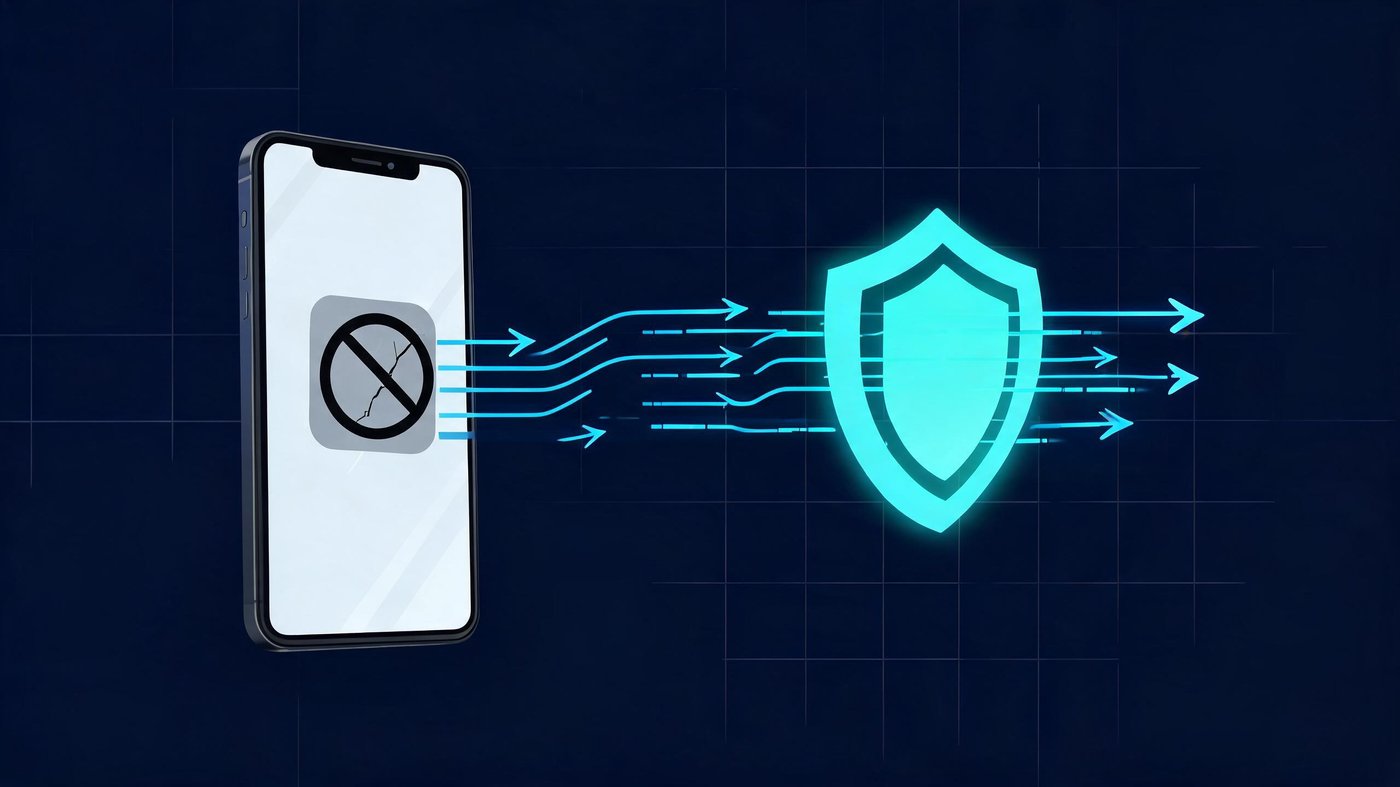
Why Is Tango Banned? App Ban Lessons for Advertisers (2026)

Why Is Tango Banned? The Short Answer
Tango — the live-streaming and video-chat app — has been restricted or removed in several markets because of content-moderation disputes and local regulatory compliance decisions, not because the app itself stopped working. In countries such as Pakistan, regulators ordered the app blocked after ruling that some user-generated streams broke local content rules. In app stores, similar takedowns happen when a listing is flagged for policy violations during review. The pattern is always the same: a platform or regulator decides the app crosses a line, and access is cut off — often overnight, and often with little warning.
That overnight part is exactly why "Tango app banned" matters to anyone who buys traffic or runs mobile campaigns. If a mature, well-funded app can lose distribution in a day, so can your landing pages, ad accounts, and promotional links. This guide breaks down why apps get banned, and — more importantly — what advertisers and growth marketers can do to keep traffic flowing when a ban lands.
Why Apps and Ad Accounts Get Banned
App bans and ad-account suspensions look different on the surface, but the root causes overlap. Understanding them is the first step to building resilience.
1. Content and policy violations
Every store and ad network runs automated and human review against a policy rulebook. A single flagged asset — a misleading screenshot, an unapproved claim, a page that behaves differently for reviewers than for users — can trigger a takedown. Reviewers err on the side of removal because a bad app costs them more than a false positive costs you.
2. Regional and regulatory blocks
A ban is not always the store's decision. National regulators can order ISPs to block an app or a domain, as happened to Tango in some markets. These blocks are geographic: your app may be perfectly healthy in 40 countries and dark in one.
3. Behavioral and quality signals
High refund rates, crash loops, fake installs, or sudden unnatural traffic spikes all feed risk models. Ad platforms in particular watch for traffic that looks automated or incentivized, and will suspend accounts that trip those thresholds.
4. Association and shared-fate risk
If your app, domain, or ad account shares infrastructure — the same developer account, the same billing profile, the same redirect domain — a ban on one asset can cascade to the others. This is the single most underestimated risk for growth teams running many campaigns from one nest.
The Real Lesson for Advertisers: Bans Are a Traffic-Continuity Problem
A ban is not a legal problem you argue your way out of after the fact. By the time you file an appeal, your traffic is already gone and your ad spend is already burning against a dead destination. The teams that survive bans treat them as an operational continuity challenge and design for them before they happen.
Three principles separate resilient advertisers from fragile ones:
- Isolate blast radius. No single ban should be able to take down your whole operation. Separate your accounts, domains, and destinations so one takedown is a contained incident, not an extinction event.
- Control what the destination shows. You should be able to change what a link resolves to — instantly — without re-approving anything upstream. When a page is flagged, the ability to route real users to a compliant, working experience while a review is pending is the difference between a pause and a wipeout.
- Monitor continuously. Most teams find out about a ban from a drop in conversions hours later. Real-time traffic auditing — pass/block rates, geographic anomalies, sudden bot spikes — turns a next-day disaster into a same-minute alert.
How Traffic Routing and Filtering Keep Campaigns Alive
The technical backbone of ban resilience is intelligent traffic routing — deciding, per visitor, which experience to serve based on risk signals. This is a mainstream compliance-and-risk technique, and it does three jobs at once:
- Filters low-quality and automated traffic (data-center IPs, headless browsers, known bot ASNs) before it ever reaches — or contaminates — your money page.
- Applies geo and device targeting so users in restricted regions or on unsupported devices get an appropriate, compliant experience instead of a broken one.
- Separates the review experience from the live experience so that what a platform reviewer sees is always your clean, policy-compliant safe page, while genuine users get the full product.
DeepClick's traffic-protection layer, 绿盾 / Shield, is built precisely for this: it scores every visit, filters invalid traffic, and lets you control routing rules in real time — so a single flagged asset never becomes a single point of failure. For teams that also need to win back users after a disruption, pairing it with re-engagement flows recovers audiences a ban would otherwise strand.
A Practical Ban-Resilience Checklist
Use this before your next campaign goes live, not after a takedown:
- Domains — Fragile: one domain for everything. Resilient: separate domains per campaign cluster.
- Ad accounts — Fragile: a single account on a single billing profile. Resilient: segmented accounts with isolated billing.
- Destinations — Fragile: a hard-coded landing URL. Resilient: routable links you can repoint instantly.
- Traffic quality — Fragile: no filtering. Resilient: bot, geo, and device filtering at the edge.
- Monitoring — Fragile: checking conversions once a day. Resilient: real-time pass/block auditing.
- Recovery — Fragile: rebuilding from scratch. Resilient: a pre-built re-engagement audience ready to go.
If more than two of these describe your current setup as "fragile," you are one review decision away from a bad week.
Frequently Asked Questions
Is the Tango app permanently banned everywhere?
No. Tango's restrictions are market-specific and have changed over time. It has been blocked or removed in some jurisdictions during regulatory disputes while remaining available in others. Availability depends on the local regulator and the current state of any store review.
Can a banned app or page come back?
Often, yes — through appeals, policy fixes, or regulatory negotiation — but recovery can take days to weeks. The point of ban-resilience planning is to keep traffic productive during that gap, not to rely on a fast reversal.
How do advertisers protect campaigns from sudden bans?
By isolating infrastructure (separate domains, accounts, and destinations), filtering low-quality traffic before it reaches the money page, controlling destination routing in real time, and monitoring pass/block rates continuously. A traffic-protection layer like Shield automates most of this.
Does traffic routing violate ad-platform policy?
Routing itself — filtering bots, applying geo/device targeting, serving a compliant safe page to everyone — is a standard risk-management practice. What platforms prohibit is deception. Keep your safe page genuinely compliant and your practice stays inside the lines.
Key Takeaways
The "Tango app banned" story is a preview of a risk every growth team faces: distribution can vanish overnight, for reasons often outside your control. You cannot guarantee you will never be flagged — but you can guarantee that a flag becomes a contained, survivable event rather than a company-ending one. Isolate your blast radius, control your destinations, filter your traffic, and monitor in real time. Build that resilience with DeepClick Shield before you need it.
