Facebook Mobile Measurement Partner: How Meta MMP Attribution Works (2026)

Facebook Mobile Measurement Partner: How Meta MMP Attribution Works (2026)
If you run app install campaigns on Meta, sooner or later someone asks why the numbers in Ads Manager do not match the numbers in your analytics tool. The answer usually sits with a Facebook mobile measurement partner — the certified third party that sits between your app and Meta and decides which install gets credited to which ad.
This guide explains what a Facebook mobile measurement partner actually is, how the data flows, what Meta does and does not tell your MMP, and how to choose one without buying capacity you will never use.
What is a Facebook mobile measurement partner?
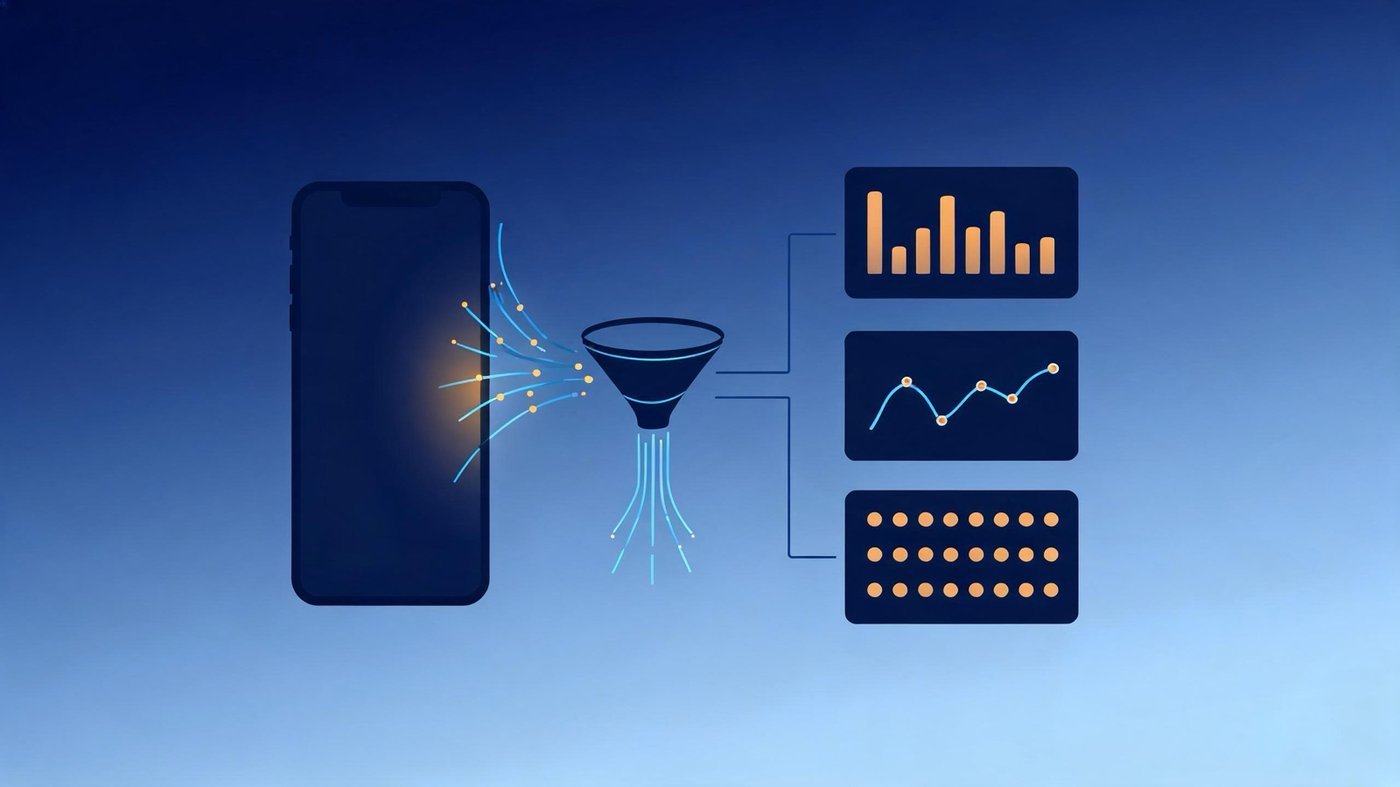
A mobile measurement partner (MMP) is an independent attribution vendor that collects install and in-app event data from your app SDK, matches each event back to the ad that drove it, and reports the result in one dashboard across every channel you buy.
A Facebook mobile measurement partner is simply an MMP that Meta has certified for its partner program. Certification means two practical things:
- The vendor has a working integration with Meta's attribution endpoints, so it can send events to Meta and receive attribution answers back.
- The vendor has agreed to Meta's data-handling terms, which is what allows the exchange to happen at all.
The badge is about integration and contractual standing. It is not a performance ranking, and it does not mean one certified vendor attributes better than another.
Why Meta needs an MMP in the first place
Most ad networks let your MMP see the click, then let the MMP decide attribution. Meta does not work that way. Meta is a self-attributing network (SAN), and that single fact explains most of the confusion.
With a self-attributing network the sequence runs like this:
- A user taps your ad in Facebook or Instagram. That click stays inside Meta's own systems — your MMP never sees it.
- The user installs and opens your app. Your MMP's SDK fires an install event.
- Your MMP asks Meta: did you drive this install?
- Meta checks the user against its own record of clicks and views, and answers yes or no.
- If Meta says yes, your MMP labels the install as Meta and attributes any downstream events to that source.
The consequence is that Meta grades its own homework, and so does every other SAN. Your MMP is the referee only when two networks both claim the same install — it applies your attribution window and last-touch rules and awards the install to one of them.
This is also why Ads Manager numbers are almost always higher than MMP numbers. Meta reports every install it believes it influenced; your MMP reports only the installs where Meta won the comparison against all other claimants.
How the data actually flows
Android
On Android the chain is comparatively clean. Google Play passes an install referrer to your app, your MMP's SDK reads it, and the MMP reconciles that signal with Meta's attribution response. Deterministic matching is available for a large share of traffic.
iOS
On iOS, App Tracking Transparency changed the picture. Where a user has not granted permission, there is no cross-app identifier to match on, and attribution falls back to Apple's SKAdNetwork (and the newer AdAttributionKit), which returns aggregated, delayed, privacy-limited postbacks rather than user-level records.
Two consequences follow, and both are worth planning for:
- Delay. SKAdNetwork postbacks arrive on Apple's timer, not yours. Same-day optimisation on iOS is not something you should design your process around.
- Coarseness. Conversion values are limited in resolution, so deep-funnel events have to be compressed into a small encoding scheme. Your MMP will help you design that scheme; it cannot give you back the detail Apple removed.
For web conversions attached to Meta campaigns, Aggregated Event Measurement applies a similar aggregation and prioritisation logic, with a limited number of ranked events per domain.
Which vendors are Meta mobile measurement partners
The certified list changes over time, so treat any list — including this one — as a starting point to verify against Meta's own partner directory rather than as gospel. The vendors most commonly encountered in app campaigns are AppsFlyer, Adjust, Branch, Kochava, Singular, Airbridge and Tenjin.
Where they genuinely differ:
|
Dimension |
What to actually check |
|---|---|
|
Pricing model |
Per-attributed-install, per-MAU, or flat platform fee — the model matters more than the headline rate |
|
Fraud protection |
Whether it is included or a paid add-on, and whether rejected installs are still billed |
|
Deep linking |
Quality of deferred deep linking, which is where most integration time is spent |
|
Cohort and retention reporting |
Whether cohorts are recomputed historically or frozen at ingest |
|
Raw data export |
Whether event-level exports are included, and at what latency |
|
Web and PWA coverage |
Whether anything outside the native app is measured at all |
That last row is the one most teams discover too late.
What a Facebook MMP does not cover
An MMP is an app measurement product. Its SDK lives inside a native binary, and its attribution model assumes an install event exists.
That leaves a real gap for anyone whose funnel is not entirely in-app:
- Traffic that lands on a web page and converts there, with no install at all.
- Progressive web apps, which are added to the home screen rather than installed from a store, so there is no install referrer and no SDK to fire one.
- The stretch between ad click and app open — the landing page, the redirect chain, the store page — which is where a large share of paid traffic is actually lost.
An MMP will tell you, accurately, that you paid for a click that never became an install. It will not tell you where in the post-click journey it died. That is a different measurement problem, and it needs a different instrument — this is the layer DeepClick is built for, alongside your MMP rather than instead of it.
How to choose one
A short, honest checklist:
- Start from your funnel, not the vendor list. If more than a small share of your conversions happen outside the app, an MMP alone will never reconcile your numbers.
- Model the cost at your real volume. Per-install pricing and per-MAU pricing produce very different bills at scale; ask for both quotes.
- Test deferred deep linking before signing. It is the feature most likely to consume engineering weeks.
- Ask what happens to rejected fraudulent installs. Some contracts still bill for them.
- Check raw data access. If you cannot export event-level data, you cannot audit the attribution you are paying for.
- Confirm the Meta integration covers the campaign types you run, not just standard app installs.
Then accept, up front, that Ads Manager and your MMP will never fully agree. The goal is not identical numbers. The goal is one consistent, cross-channel source of truth for budget decisions, plus a clear understanding of why the platform's own number is higher.
Where to go next
If you are still deciding on a vendor, our comparison of mobile attribution software covers the shortlist in more depth. For the underlying concepts, start with the mobile measurement partner guide or the broader mobile advertising attribution explainer. If your integration questions are technical, the mobile attribution SDK guide goes step by step.
FAQ
Is a Facebook mobile measurement partner required to run app install ads?
No. You can run Meta app campaigns using Meta's own SDK and reporting. An MMP becomes necessary when you buy on more than one network and need a single, comparable view across all of them.
Why are Meta's install numbers higher than my MMP's?
Because Meta reports every install it believes it influenced, while your MMP awards each install to exactly one network after comparing all claims under your attribution window. Some gap is structural and expected.
Can I use two MMPs at once?
Technically yes, and teams do it during a migration. As a steady state it is expensive and creates a second reconciliation problem, since the two vendors will disagree with each other as well as with Meta.
Does an MMP work for a progressive web app?
Not in the usual sense. A PWA is added to the home screen rather than installed through a store, so there is no install referrer and no native SDK lifecycle to hook. PWA measurement is a web analytics and post-click problem.
How long does a Meta MMP integration take?
The SDK itself is usually quick. The time goes into event schema design, deferred deep link testing, and — on iOS — agreeing the SKAdNetwork conversion-value encoding. Budget engineering weeks rather than days.
